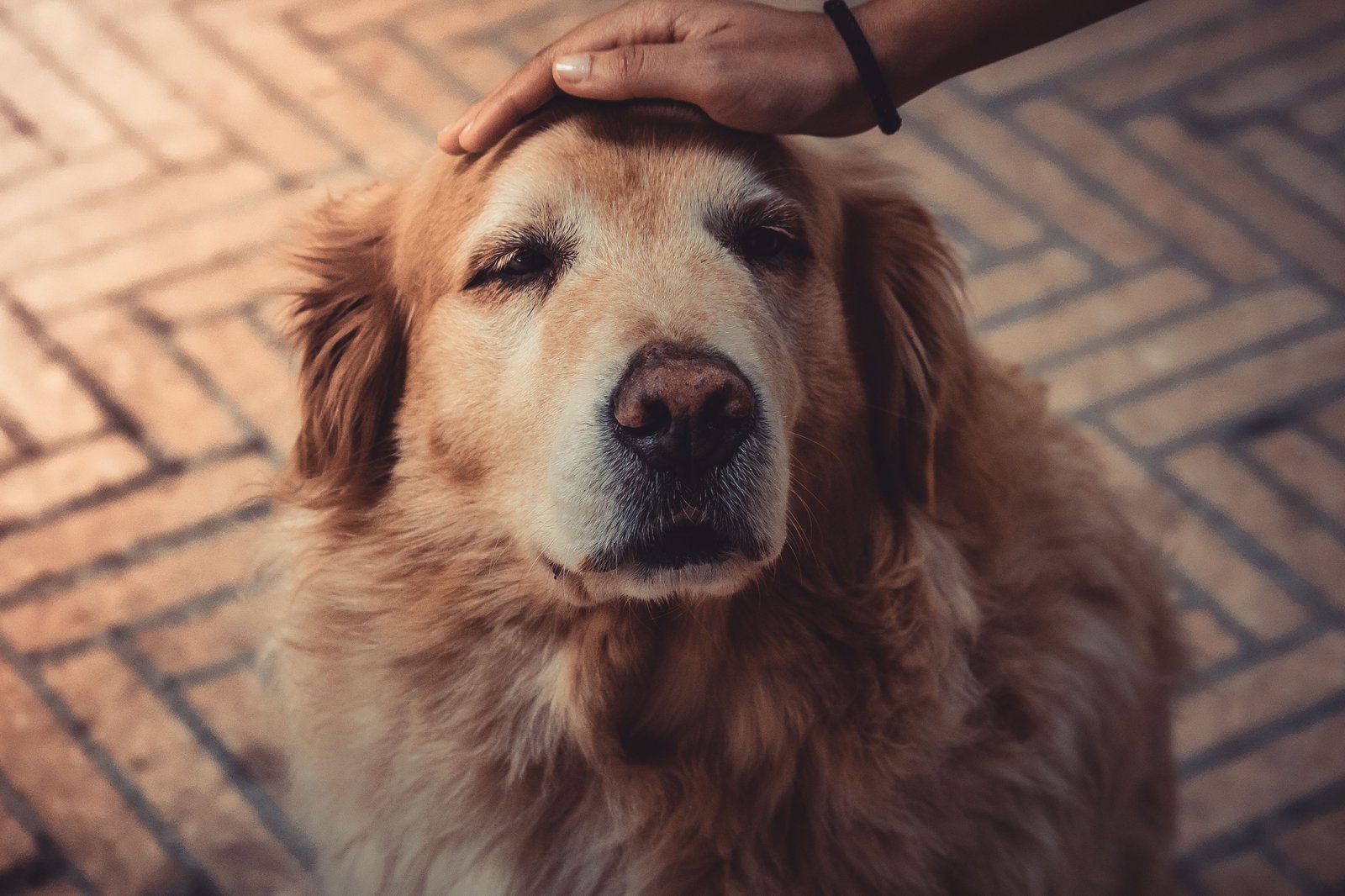
There’s a moment many dog owners recognize: you call your dog’s name, and nothing happens. No perky ears. No tail starting to wag. You call again, louder this time, maybe a little worried. Still nothing. Then you walk into their line of sight, and suddenly they’re alert, wagging, happy to see you.
If your dog is getting older, that moment might be the first sign of age-related hearing loss, and it’s more common than most people realize.
What the science says
Age-related hearing loss in dogs is called presbycusis, and it’s well-documented in veterinary medicine. Just like in humans, the inner ear gradually deteriorates over time. Tiny hair cells in the cochlea, responsible for converting sound into nerve signals, break down and don’t regenerate. The result is a slow, progressive loss of hearing, usually starting with higher frequencies first.
It affects a significant proportion of dogs over the age of 10, and no breed is completely immune. Some are more predisposed, particularly dogs with white or merle coats, or breeds with congenital deafness in their lines such as Dalmatians and Australian Shepherds.
Not all hearing loss in older dogs is purely age-related, though. Chronic ear infections, inner ear disease, and certain medications can all contribute to or accelerate the decline. If you notice signs of hearing loss in your dog, always check in with your vet first. Some causes are treatable, and catching them early makes a real difference.
Signs your dog may be losing their hearing
Most owners do notice that something is off, but it’s easy to misread as stubbornness, cognitive decline, or just “getting old.” The key is knowing which signs point specifically to hearing loss, and which might mean something else.
The most telling signs of hearing loss
- Not reacting to sounds they always responded to before, the treat bag, the leash, the doorbell, especially when their back is turned and they can’t see you. This is the strongest signal.
- Startling when touched from behind or while sleeping. A dog who can hear you coming doesn’t startle like this. If it’s happening regularly, take note.
- Responding normally when they can see you, but not when you call from another room or out of sight. The difference between “ignoring you” and “not hearing you” becomes clearer when you test it consistently.
Signs that overlap with other things
- Sleeping more deeply and being harder to wake. This also happens with general aging and cognitive decline, so on its own it’s not a strong indicator.
- Barking more than usual or seemingly at nothing. This is actually more typical of cognitive dysfunction than hearing loss. If it’s the main symptom, it’s worth discussing with your vet specifically.
- Head shaking or scratching at the ears. This points to ear irritation or infection, not hearing loss itself. Still, it’s worth acting on quickly: an untreated or chronic ear infection can itself lead to permanent hearing loss over time, so have it checked separately.
If you’re noticing the first group of signs, especially the combination of not reacting to familiar sounds and startling at touch, that’s a good reason to visit your vet. They’ll typically do a clinical assessment first, testing your dog’s response to sounds without visual cues. A BAER test (Brainstem Auditory Evoked Response), which measures electrical activity in the auditory pathway, can give a definitive diagnosis, but it’s specialized and not routinely done. It’s mainly used by neurologists or in breeding programs where certainty is needed.
What it feels like for your dog
Losing hearing is disorienting. Dogs use sound to track where you are in the house, to sense someone approaching, to feel safe and connected. When that starts to fade, it can cause real anxiety, not because the dog understands what’s happening, but because their world suddenly feels less predictable.
Dogs with hearing loss may become clingier, more anxious, or more easily startled. Some become more vocal. Some withdraw. They need your support to adapt, and the good news is that most do, remarkably well.
Practical tips: living well with a hard-of-hearing dog
1. Shift to visual cues and hand signals
This is the single most impactful thing you can do. Start teaching hand signals, or reinforce existing ones, while your dog can still hear reasonably well, so the transition is smoother. Basic signals for sit, stay, come, and lie down are easy to teach with positive reinforcement. Many deaf dogs learn them quickly and respond just as reliably as hearing dogs do.
Even simple things like waving to get their attention, or stomping gently on the floor so they feel the vibration, can make daily communication much easier.
2. Never startle them from behind
A dog who can’t hear you coming will startle if you touch them without warning, and a startled dog, even a gentle one, may snap out of reflex. Always approach from the front, or give a gentle tap on the surface near them first. Teach everyone in your household, especially children, to do the same.
3. Keep their environment predictable and their sleep protected
Routine is comforting for dogs with hearing loss. If they can no longer rely on sound cues like the garage door or the jingle of your keys, consistent patterns in the day help them feel secure. Same feeding times, same walk routes, same places to sleep.
Speaking of sleep: a hard-of-hearing dog startles more easily when woken. Make sure their sleeping spot is somewhere calm and low-traffic, where they won’t be constantly disturbed.
4. Don’t underestimate smell and touch
As hearing fades, other senses become more important, and this is a beautiful thing to lean into. Scent enrichment like nosework games, sniff walks, or hiding treats keeps the brain active and gives real satisfaction that isn’t sound-dependent. Physical closeness matters just as much: gentle, predictable touch and simply being near you remains deeply reassuring for a dog whose world has gotten quieter.
5. Adapt walks and outdoor time
Off-leash time becomes higher risk when a dog can’t hear you calling. Even a well-trained dog may not notice they’ve wandered too far. Keep them on a long lead in open spaces, or invest in a GPS tracker collar. Stick to familiar areas when possible. Keep in mind too that a dog who can’t hear won’t hear approaching cars, cyclists, or other dogs coming, so stay extra alert near traffic and keep them leashed along busy roads.
6. Keep up ear health check-ins
Even if hearing loss is age-related, infections and inflammation can make it worse, and importantly, ear scratching is not a normal symptom of age-related hearing loss. If your dog is frequently scratching at their ears, something else is going on. Ask your vet to check the ears regularly, and watch between appointments for head shaking, scratching, discharge, or smell. Early treatment prevents unnecessary additional damage.
7. Consider a vibrating collar
Once other adjustments are in place, a vibrating collar can be a useful next step. These are designed specifically for deaf dogs, not shock collars, but gentle vibration (like a phone buzzing) that you can pair with a hand signal or treat to mean “look at me.” Particularly helpful for recall outdoors or getting attention at a distance.
A word about cognitive decline
It’s worth knowing that hearing loss and canine cognitive dysfunction (CCD, sometimes called doggy dementia) can occur at the same time, and the symptoms sometimes overlap. Disorientation, confusion, changes in sleep patterns, and increased anxiety can show up in both. If you’re unsure what you’re dealing with, your vet can help untangle the picture. Treating any underlying conditions, infections, pain, cognitive changes, is always the first step before assuming it’s purely hearing loss.
The bigger picture
Your dog doesn’t need to hear your voice to know you love them. They read your body language, your smell, your touch, your predictability. A dog who has learned to trust you over years of life together will continue to feel that bond, it just travels through different channels now.
The earlier you recognize hearing loss, the more you can do to support your dog through it. And the more comfortable and connected their senior years will be.
They’ve been listening to you their whole lives. Now it’s your turn to adapt to them.
This post is for informational purposes only. If you have concerns about your dog’s hearing or health, always consult a veterinary professional.
At Tails that Thrive we believe a dog doesn’t need to hear your voice to feel your love. Connection travels just as well through attention, scent, touch and predictability.
Noticing your senior dog starting to hear less, or unsure about what you’re seeing? Send me a message on Instagram via @tailsthatthrive, I’m always happy to think it through with you.