Ons verhaal Meet Milo & Pretzel
Tails That Thrive is ontstaan dicht bij huis, bij Milo en Pretzel. Milo, mijn senior chihuahua, leerde me hoe belangrijk het is om écht te kijken naar wat een dier nodig heeft, zeker wanneer standaardadvies niet helemaal past. Pretzel, onze Britse Langhaar met een kwetsbaar hartje, herinnert me elke dag aan hoe waardevol goede zorg, rust en aandacht zijn. Wat ik door hen leer, deel ik hier.
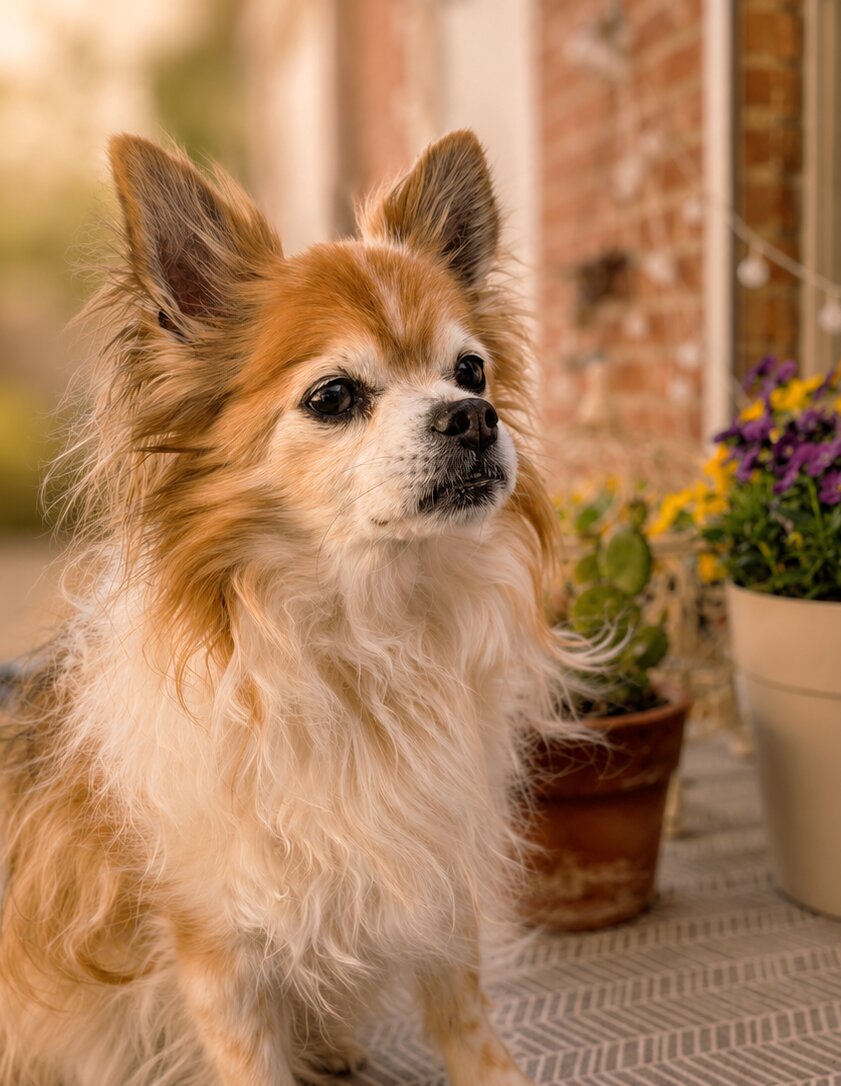
Milo
Milo is een echte schat, een loyale "fletser" die het liefst altijd dichtbij is. Hij is slim, nieuwsgierig, en gaat graag met ons mee op avontuur. Maar onder al dat enthousiasme schuilt ook een gevoelige kant.
Hij volgt me door het huis, leert trucjes sneller dan ik ze kan verzinnen (zeker met een beloning), en heeft een uitgesproken interesse in mensen: hij blijft graag stilstaan om hen te bestuderen, en gaat soms gewoon even hallo zeggen. Een open deur kan hij ook niet weerstaan, even binnenkijken móét. In elk wandelgebied stappen zijn kleine pootjes vol moed met ons mee, ook nu nog op zijn oude dag, al houden we zijn tempo en pauzes goed in de gaten. Een terrasje doen na de wandeling is de kers op de taart, want daar mag hij iets uit zijn eigen "snackpakketje".
Milo had vroeger veel last van zijn maag en darmen (braken, diarree), ontstekingen en jeuk. In een goede dierenkliniek bleek hij allergisch voor meerdere vleessoorten én voor rijst en aardappel: ingrediënten die in opvallend veel hondenvoer zitten, ook in veel "hypoallergene" merken. Met bewust afgestemde voeding gaat het hem ondertussen zoveel beter. Maar voeding is voor mij maar één deel van het verhaal: mentale en fysieke stimulatie op zijn maat zijn even belangrijk. Snuffelwandelingen, voorspelbare routines en spelletjes die bij hem passen doen hem zichtbaar goed. Wat me in die hele zoektocht (voeding én verrijking) telkens opvalt, is hoe weinig er gemaakt wordt voor kleine senior hondjes. Veel is afgestemd op grotere, jongere honden, dus zoek ik voor Milo vaak zelf uit wat veilig en passend is. Daar komt veel van wat ik op Tails That Thrive deel uit voort.
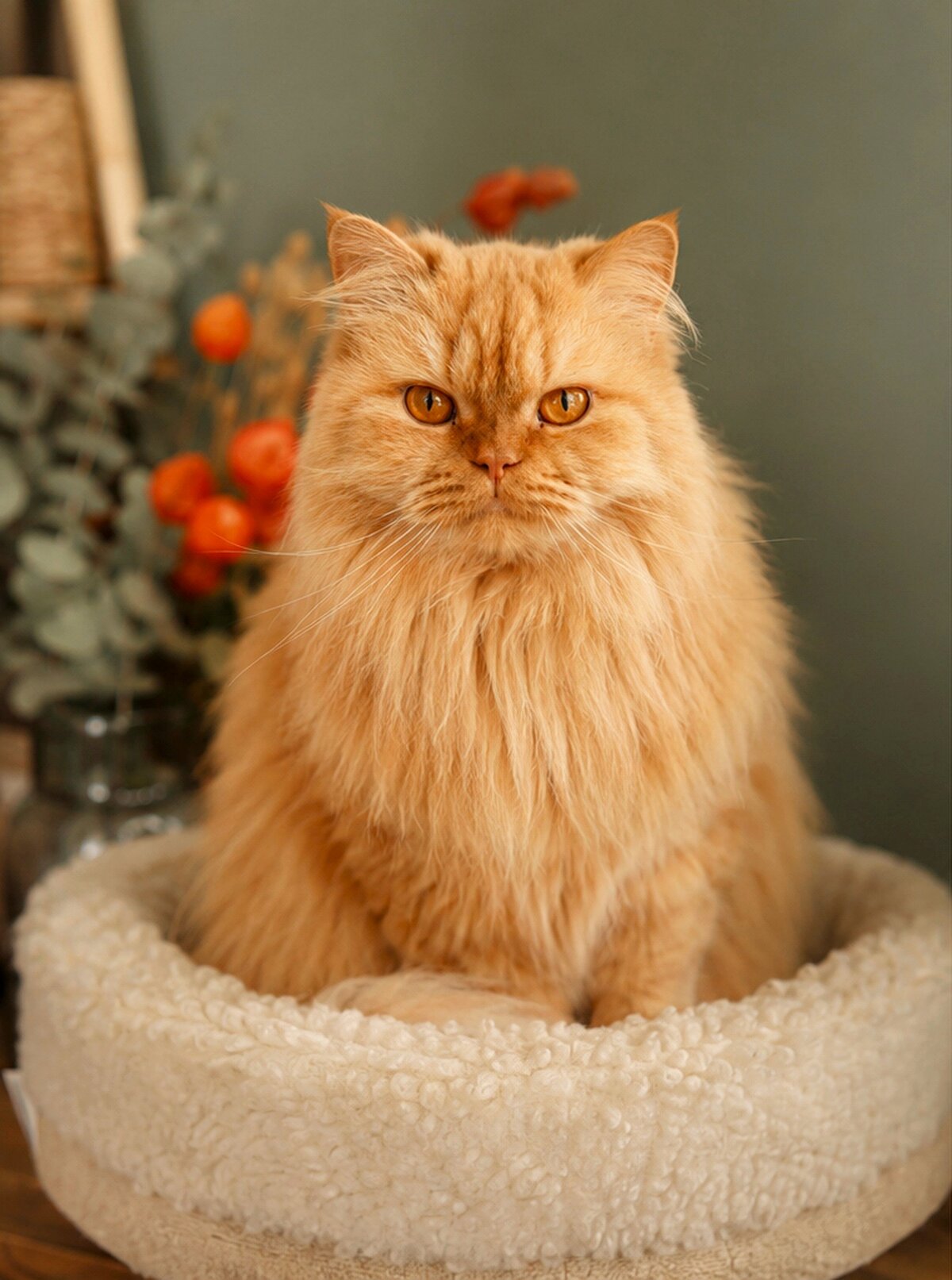
Pretzel
Pretzel is een door en door lieve kat. Een echte zachte ziel die graag in onze buurt is, zelfs als ze doet alsof het haar niets kan schelen. Maar achter haar Garfield-allure schuilt ook iets wat extra aandacht vraagt.
Ze laat haar genegenheid op haar eigen kattenmanier zien: subtiel in dezelfde kamer als wij, soms zelfs naast ons op de zetel, en als we thuiskomen staat ze ons vrolijk te begroeten. Ze kent haar naam perfect, want bij elk "Pretzel" spitsen haar oortjes onze richting uit, zelfs als ze geen zin heeft om er meteen op te reageren. Krabben deed ze nog nooit: ze "pat" altijd met ingetrokken nageltjes, gewoon met haar zachte fluffy pootjes. Voor de rest is Pretzel een luie meid, al weet ze haar luiheid wel even opzij te zetten om de hond een beetje te plagen. Stiekem is ze ook helemaal verliefd op mijn vriend: tijdens zijn thuiswerkdagen probeert ze op alle mogelijke manieren zijn aandacht te trekken aan zijn bureau.
Maar onder al die zachtheid zit ook een fragiele kant. Pretzel heeft Hypertrofische Cardiomyopathie (HCM), de meest voorkomende hartziekte bij katten en extra prevalent bij Britse korthaar en langhaar: het hartspierweefsel verdikt en de kamertjes worden kleiner. Bij haar aankoop met stamboom bleek slechts één kant van haar afstamming getest op HCM. Vandaag eisen erkende rasverenigingen gelukkig dat beide ouderdieren op HCM zijn getest, maar voor ons kwam dat inzicht te laat. Daarom: vertrouw niet enkel op de stamboompapieren, maar vraag bij een raskat expliciet naar de HCM-testresultaten van beide ouderdieren. Wat ik wél kan beïnvloeden, doe ik des te bewuster: doordachte voeding, dagelijks haar tandjes poetsen, en goed kijken naar wat ze nodig heeft. Haar levensverwachting blijft onzeker, en dat heeft me iets belangrijks geleerd: de tijd met Pretzel én met Milo is niet vanzelfsprekend. Ze staan elke dag bovenaan mijn prioriteitenlijst.
En hoewel Tails That Thrive vandaag een hondenproject is, wie weet wat de toekomst nog brengt voor onze kattenvrienden ;)
← Terug naar home
Our story Meet Milo & Pretzel
Tails That Thrive started close to home, with Milo and Pretzel. Milo, my senior chihuahua, taught me how important it is to truly look at what an animal needs, especially when standard advice does not quite fit. Pretzel, our British Longhair with a delicate heart, reminds me every day how valuable good care, calm and attention really are. What I learn through them, I share here.
Milo
Milo is a real sweetheart, a loyal little snuggler who'd rather always be close by. He's clever, curious, and loves coming along on our adventures. But beneath all that enthusiasm there's also a sensitive side.
He follows me around the house, picks up tricks faster than I can come up with them (especially with a reward), and has a clear interest in people: he loves to stop and study them, and sometimes just walks up to say hello. He can't resist an open door either, he simply has to peek inside. In every walking area his little paws come along the whole way, even now in his older years, although we keep a careful eye on his pace and breaks. A café after the walk is the cherry on top, because that's where he gets something from his own "snack pack".
Milo used to struggle with his stomach and gut (vomiting, diarrhea), inflammations and itching. At a good vet clinic, it turned out he's allergic to several meats and to rice and potato: ingredients that turn up in remarkably many dog foods, including many "hypoallergenic" brands. With deliberately tuned food, he's doing so much better now. But food is only one part of the story: mental and physical stimulation on his level matters just as much. Sniffing walks, predictable routines and games that suit him do him visible good. In that whole search (food and enrichment alike), I keep noticing how little is actually made for small senior dogs. Much is aimed at bigger, younger dogs, which means I often figure out for Milo myself what's safe and suitable. A lot of what I share on Tails That Thrive comes from that search.
Pretzel
Pretzel is a deeply sweet cat. A soft soul who likes being close, even when she pretends she couldn't care less. But behind her Garfield-style charm there's also something that asks for extra care.
She shows her affection in her own cat way: subtly in the same room as us, sometimes right next to us on the couch, and when we come home she greets us with cheerful enthusiasm. She knows her name perfectly, because at every "Pretzel" her ears prick in our direction, even when she doesn't feel like reacting straight away. She has never scratched anyone: she always "pats" with her claws tucked in, just with her soft fluffy paws. Aside from that, Pretzel is a true lounger, who occasionally leaves her comfy spot to give Milo a playful tease. And secretly, she's also head over heels for my boyfriend: during his work-from-home days she does everything she can to grab his attention at his desk.
But beneath all that softness lies a fragile side too. Pretzel has Hypertrophic Cardiomyopathy (HCM), the most common heart disease in cats and extra prevalent in British Shorthair and Longhair: the heart muscle thickens and the chambers shrink. When we got her with pedigree, only one side of her lineage had been tested for HCM. Today recognised cat breed associations thankfully require both parents to be tested for HCM, but for us that realisation came too late. So: don't rely on pedigree papers alone. Explicitly ask for HCM test results from both parents. What I can influence, I do all the more deliberately: thoughtful food, daily tooth brushing, and paying close attention to what she needs. Her life expectancy stays uncertain, and that's taught me something important: time with Pretzel and with Milo is never to take for granted. They sit at the top of my priorities every day.
And although Tails That Thrive is a dog project today, who knows what the future might still bring for our feline friends ;)
← Back to home